
Behind the Scenes of Breakfast
Hotel breakfast is often one of the moments guests remember most, yet it is also one of the most underestimated by those who only experience it from the other side of the table. Behind a well-organized buffet, a freshly served hot coffee, a dining room ready for opening, and a service that seems to run effortlessly, there is a precise organization made up of tight schedules, coordination, attention to detail, and a strong ability to adapt. It is a job that begins when, for most people, the day has not even started yet, and it requires focus, stamina, and constant presence of mind. Breakfast, in other words, is not simply the first meal of the day: in a hotel, it is a true test of service quality.
Those who work in the breakfast department know very well that morning service is a race against time. Before guests enter the dining room, everything must already be ready and carefully organized: the buffet must be set up, products arranged, temperatures checked, coffee machines tested, tableware placed neatly, tables prepared, and the space made welcoming. It is not simply about “tidying up” a room, but about creating an experience. Guests often do not see the work that takes place beforehand; they only experience the final result. And it is precisely in this space between invisible work and visible results that the professionalism of the staff becomes clear.
Waking Up Before Dawn
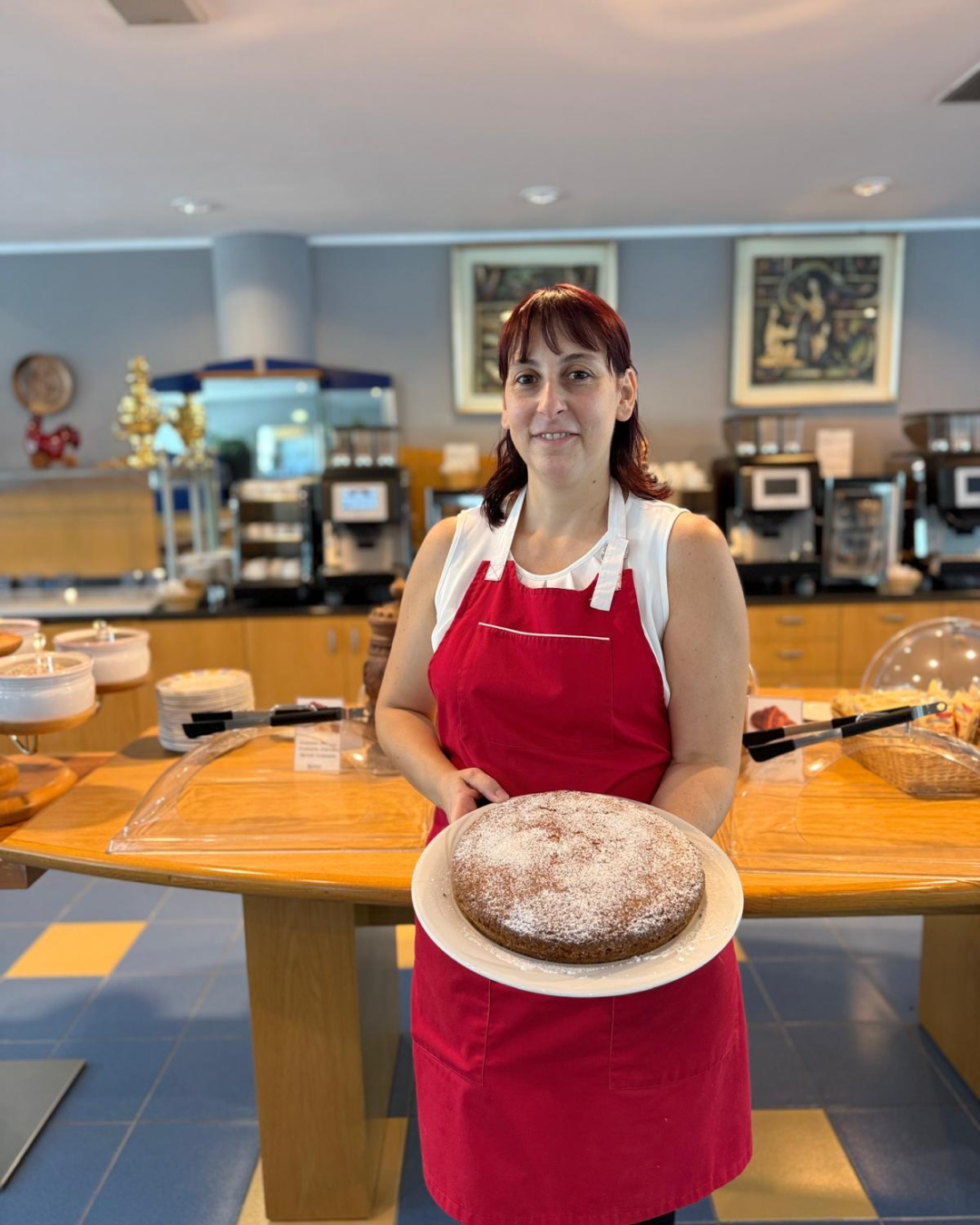
When the city of Aosta is still asleep and the hotel is immersed in silence, someone is already at work. Maria, the Breakfast Manager, is among the first to arrive: this is where the guests’ experience begins every day.
“My day starts at 6:00 a.m. I need enough time to organize everything carefully: I prepare the hot breakfast selection with scrambled eggs, bacon, and sausages, and I set up the cold cuts buffet. It is a crucial stage: being fully prepared is the first step towards providing excellent service.”
One of the most noticeable aspects of working in the breakfast room is the schedule. To guarantee efficient service, staff have to arrive very early, often at five or six in the morning, when the rest of the city is still quiet and the hotel is immersed in an almost unreal silence. At that time of day, the breakfast department comes to life with a rhythm of its own: the dining room lights are switched on, preparations begin, supplies are checked, and staff make sure that nothing is missing before opening. It is a start to the day that requires discipline and well-established routines, because any mistake made before guests arrive can affect the entire service.
The challenge is not only physical. Waking up so early means working at a time when the body is not yet fully alert, while still maintaining concentration and friendliness from the very first hours of the day and being ready to respond accurately even when several requests arrive at once. Morning hospitality leaves little room for hesitation: breakfast staff need to be attentive, quick, and capable of conveying a sense of calm even when time is tight. For many guests, their first impression of the day begins right here.
A Silent Choreography
Hotel breakfast can be seen as a true silent choreography: everyone has a role, every step has a purpose, and every gesture helps keep the service running smoothly. Some members of staff take care of setting up the buffet, others check that products are replenished, some prepare hot drinks, others monitor the tables or welcome guests, while behind the scenes the kitchen ensures that everything works in sync with the dining room. Everything needs to run without friction, so that guests do not notice interruptions or disorder, but only a sense of natural efficiency.
This constant coordination is one of the most interesting aspects of morning service. Unlike other moments of the day, breakfast brings together many different needs within a short period of time: the guest who only wants a quick coffee before leaving, someone looking for a complete and relaxing breakfast, a family with children, an international traveller with different eating habits, or a guest with specific requests. Managing this variety means being flexible without losing control, while constantly balancing speed and care.
The People Behind the Buffet
When people think about hotel breakfast, they often picture the buffet as a collection of products: bread, butter, jam, fruit, yoghurt, juices, eggs, pastries, cold cuts, cheeses, and hot drinks. But the real heart of the service is the people who make it possible. Behind every replenished tray and every clean table is the work of breakfast room attendants, kitchen staff, bar staff, and managers who coordinate the department and respond whenever something unexpected happens. Every role is essential, even though much of this work remains invisible to guests.
The value of this work lies precisely in the combination of different skills. Those working in the dining room need a strong sense of order, attention to detail, and good interpersonal skills. Those in the kitchen need to guarantee punctuality, quality, and consistency. Whoever prepares coffee or hot drinks needs to be fast but precise, because the service cannot afford delays. Finally, the manager has to keep the whole system together, anticipating problems and stepping in whenever something does not work as expected. It is a true team effort, and it only works when everyone knows their role and is able to anticipate the needs of others.
First Impressions Matter
“A smile is the true calling card of the morning. When a guest walks in, it is essential that they find a welcoming and harmonious atmosphere, not someone looking unhappy. Starting the day by conveying positivity makes a difference: guests notice it immediately, and in that moment the service becomes much more than just breakfast.”
Breakfast is often the first real interaction between the guest and the hotel during the day. For this reason, the way it is managed has a strong impact on the overall perception of the property. A warm welcome, a smile, or a simple gesture such as bringing coffee to the table or politely responding to a special request can set the tone for the entire experience. In the same way, disorganized service, a poorly maintained buffet, or inattentive staff can damage the image of the hotel even when everything else is impeccable.
In this sense, breakfast is a hotel’s calling card. Not because it has to be perfect in an abstract sense, but because it needs to convey care. Guests do not simply expect to eat: they expect to feel welcome. That feeling comes from concrete but often simple details, such as the cleanliness of the dining room, the availability of the staff, the ability to solve small problems smoothly, and attention to different dietary habits. In an international hotel, this sensitivity becomes even more important, because the service needs to adapt to guests with different cultures, routines, and expectations.
The Pressure Behind the Service
Behind the apparent simplicity of morning service lies constant pressure. Breakfast operates within strict time constraints: everything must be ready before guests arrive and must remain fully functional for several consecutive hours. If something runs out, it needs to be replenished immediately. If a table is left dirty, it needs to be cleaned without delay. If a guest has a particular request, the staff need to listen and find a solution quickly. This constant rhythm requires energy, but also the ability to remain calm during the busiest moments.
One of the most demanding aspects is managing peak periods. There are times in the morning when the number of guests suddenly increases and the staff have to respond without losing focus. In these moments, the service becomes a true test of organization: resources need to be allocated efficiently, needs anticipated, the buffet prevented from running empty, and a smile maintained even under pressure. It is a type of expertise that is rarely noticed from the outside, but it makes the difference between an ordinary service and a truly professional one.
“The pace changes completely depending on how busy we are. On quieter days, we can spend more time with guests and pay attention to every small detail, from preparing the buffet to keeping the spaces clean. When it gets busy, however, the atmosphere changes: you need to move quickly, keep up the pace, and make sure the buffet is constantly replenished. The challenge is to remain efficient without ever losing sight of quality, even when the dining room is full.”
— Maria, Breakfast Manager
Small Stories from the Morning
The breakfast department is also a place full of small stories. Some guests always arrive at the same time and staff eventually become familiar with their routines. Others have specific requirements for health or cultural reasons. There are families who turn breakfast into a moment they will remember in the future, solo travellers who prefer discretion, and groups who arrive all at once and require quick table management. Every morning brings different situations, and this variety is precisely what makes the work less repetitive than it may appear.
Unexpected situations are also part of the job: a product that runs out earlier than expected, a coffee machine that suddenly stops working, a guest asking for something outside the usual service, or an unexpected arrival that changes the rhythm of the dining room. These situations require quick thinking. It is in these moments that the staff’s most valuable qualities become clear: the ability to improvise without losing professionalism, find quick solutions, and keep the service stable. This is where the difference between a purely operational job and a profession built on experience becomes visible.
Professionalism You Do Not See
One of the most interesting characteristics of working in the breakfast room is that, when the job is done well, it almost goes unnoticed. Guests see an orderly space, a full buffet, a clean dining room, and helpful staff. They do not see the number of actions required to achieve that result, nor the level of attention necessary to maintain it throughout the entire service. Yet this very invisibility is a sign of good organization. In many cases, the best work is the work that is only perceived through the guest’s comfort and wellbeing.
This invisibility, however, should not mean that the work is underestimated. The breakfast department is one of the most demanding areas of hotel hospitality because it concentrates a large amount of work and responsibility into just a few hours. It requires technical skills, physical stamina, attention to guests, and the ability to work as a team. It is not a secondary service, but one of the areas where the identity of the hotel becomes most visible. When the day starts well, it is often thanks to the work carried out during those early hours.
A Job That Shapes the Day
Telling the story of the staff responsible for breakfast means telling an essential part of hospitality, one that is often hidden behind the apparent simplicity of a well-arranged buffet. It is a job made up of early wake-up calls, constant attention, teamwork, and the ability to adapt to intense rhythms without losing kindness. It is also a job that has a direct impact on the guest experience, because the quality of breakfast influences their mood, their perception of the hotel, and, in many cases, even their overall memory of the stay.
In an industry where attention to detail is everything, breakfast is one of the most delicate and revealing moments of the day. This is where you can see whether the organization works, whether the staff are prepared, and whether the hotel truly knows how to take care of its guests. And perhaps this is its most authentic value: transforming an ordinary, simple, everyday ritual into a genuine moment of hospitality. Behind every table that has been set and every cup that has been served, there is silent work that begins before dawn and, without drawing attention to itself, helps guests start their day well.
Behind every breakfast served, there is work that is rarely seen but can be felt in every detail. It is the work of Maria and all the people who, every morning, before the hotel truly wakes up, create a quiet form of hospitality built on gestures, attention, and presence.
A team effort that goes far beyond simply “serving breakfast”: it shapes the beginning of every guest’s day. And it is precisely there, in those early hours suspended between darkness and daylight, that an essential part of the experience takes place: making every morning a little more welcoming, almost without anyone noticing how it happens.
