
The 2026 Giro d’Italia in Aosta Valley
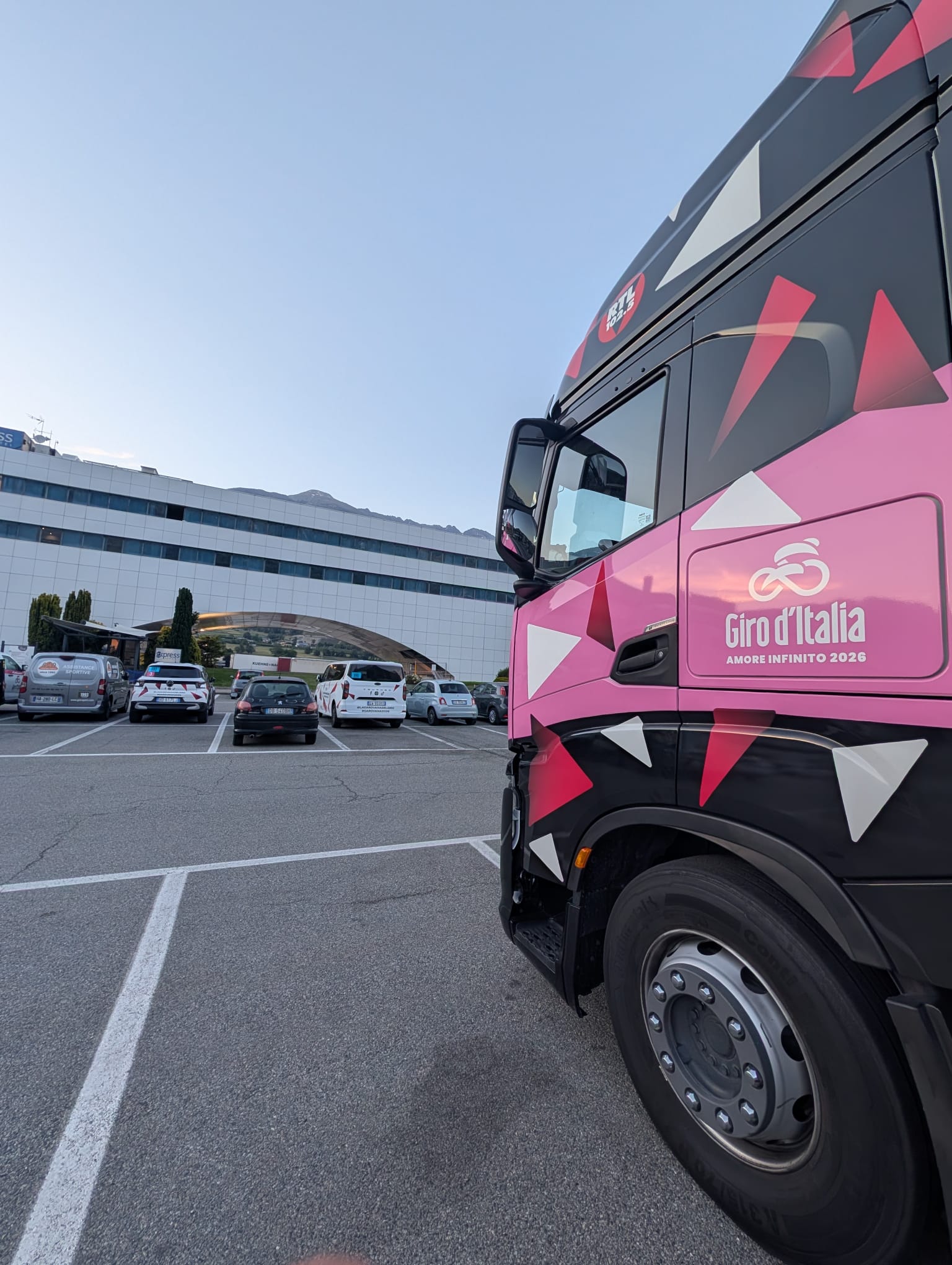
The 2026 Giro d’Italia brought Aosta Valley back into the national sporting spotlight with a stage that combined competition, landscape, and Alpine identity. On Saturday, May 23, the Corsa Rosa crossed the heart of the region with Stage 14, from Aosta to Pila, turning roads, villages, and mountain climbs into a spectacular open-air stage.
It was not simply another mountain stage. It was one of those days that perfectly capture the character of the Giro: effort, strategy, endurance, and beauty. Because when cycling comes to Aosta Valley, the spectacle is not only on the road, but all around it: in the peaks that accompany the route, in the villages crossed by the race, in the hairpin bends climbing higher and higher, and in the enthusiasm of those who stop along the roadside to cheer on the riders.
A Stage Entirely Through Aosta Valley
The Aosta–Pila stage, covering 133 kilometres, was designed entirely along the roads of Aosta Valley. It may have looked short on paper, but it was extremely demanding in terms of elevation gain, pace, and the relentless succession of climbs.
The start in Aosta immediately gave the day a special significance. With its historic centre and Roman heritage, the regional capital welcomed the pink caravan in a unique setting: an Alpine city where history, culture, and mountains coexist naturally.
From there, the race continued through several municipalities across the region, taking the Giro through valleys, open landscapes, villages, and mountain roads. Saint-Christophe, Quart, Nus, Saint-Marcel, Roisan, Valpelline, Doues, Gignod, Sarre, Saint-Pierre, Saint-Nicolas, Villeneuve, Aymavilles, Jovençan, and Gressan were among the places featured during the day, before the high-altitude finish in Pila.
It was an itinerary that showcased an authentic side of Aosta Valley, not only as a tourist destination, but as a living territory capable of hosting major events without losing its character.
The First Major Alpine Stage of the 2026 Giro
Stage 14 was one of the most eagerly awaited stages of the 2026 edition. With more than 4,000 metres of elevation gain, five classified mountain climbs, and a summit finish, it represented an important moment for the general classification.
The route offered very little respite. Shortly after the start, the riders tackled the long Saint-Barthélemy climb, followed by a fast descent and another ascent towards Valpelline and Doues. Two more demanding climbs then followed, Lin Noir and Verrogne, before the descent back towards the valley and the final major climb to Pila from the Gressan side.
The finale was the sporting heart of the day: 16.5 kilometres of steady but demanding climbing, with an average gradient of more than 7% and sections capable of testing even the strongest climbers. It was a scenic, technical, and mentally demanding ascent, where every metre had the potential to make a difference.
Pila, a Finish Steeped in Cycling History
Pila is more than just a mountain resort. For Aosta Valley, it is a privileged panoramic viewpoint, a natural terrace above Aosta, known for skiing, hiking, mountain biking, and outdoor activities throughout the year.
The arrival of the Giro added a new chapter to its sporting history. The climb to Pila, tackled in this edition from a different side compared with previous years, brought the resort back into the history of the Corsa Rosa after more than thirty years. In the 1980s and 1990s, Pila had already hosted important moments of the Giro. In 2026, it returned to the spotlight with a finish destined to remain in the memories of cycling fans.
On a clear day, the view from Pila can stretch towards some of the most iconic mountains in the Alps: Mont Blanc, the Matterhorn, Monte Rosa, and Gran Paradiso. This is precisely what makes a stage in Aosta Valley so special: the sporting competition is intertwined with a landscape that is not merely a backdrop, but an integral part of the story.
Vingegaard’s Day and the Pink Jersey
From a sporting perspective, the Aosta–Pila stage marked an important turning point in the 2026 Giro d’Italia. Jonas Vingegaard won the stage and also took the pink jersey, asserting himself on the final climb with a powerful performance worthy of a top climber.
It was the moment when the mountains began to have a real impact on the general classification. The climbs of Aosta Valley stretched out the field, put several contenders under pressure, and confirmed once again how dramatically the Giro can change in its toughest stages.
For cycling fans, days like this represent the essence of the sport: spectators lining the roads, the riders’ effort, the silence of the final kilometres, decisive attacks, and a summit finish. All of this was concentrated into one stage combining technical difficulty, spectacle, and intensity.
An Opportunity to Discover Aosta Valley
The passage of the Giro d’Italia was also an invitation to see Aosta Valley from a different perspective. Those who followed the stage had the chance to discover landscapes, villages, and views that deserve to be experienced at a slower pace even beyond race day.
Aosta, with its Roman heritage, is an ideal destination for history lovers. Saint-Pierre and Aymavilles reflect the region’s castle tradition. The Saint-Barthélemy area is also known for its Astronomical Observatory and its panoramic scenery, while Valpelline and Doues preserve a quieter, more Alpine character, shaped by pastures, trails, and small villages.
And then there is Pila, easily accessible from Aosta and perfect for those looking for nature, sport,
